Türkçe
 Русский
 Español
 Deutsch
 Français


Adverse Event Reporting System Training
We Do Not Leave Safety in the Hospital to Chance
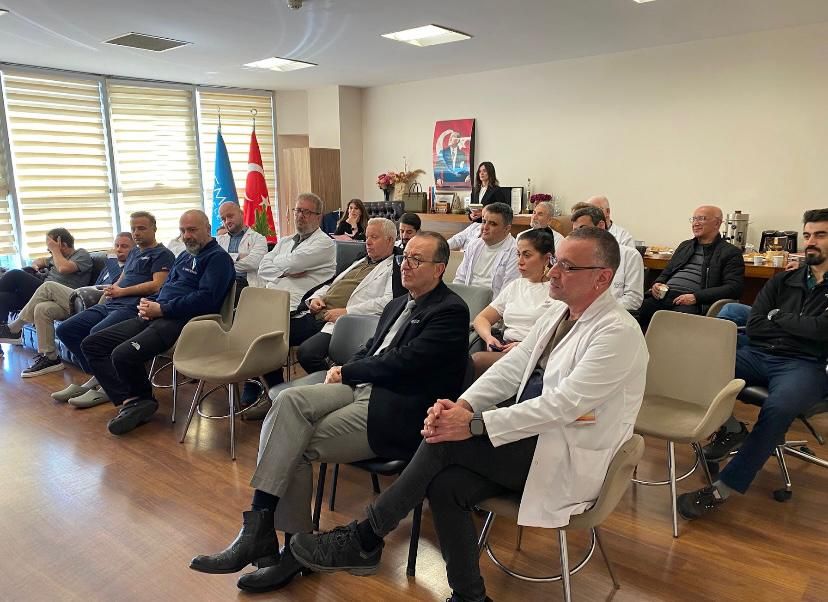
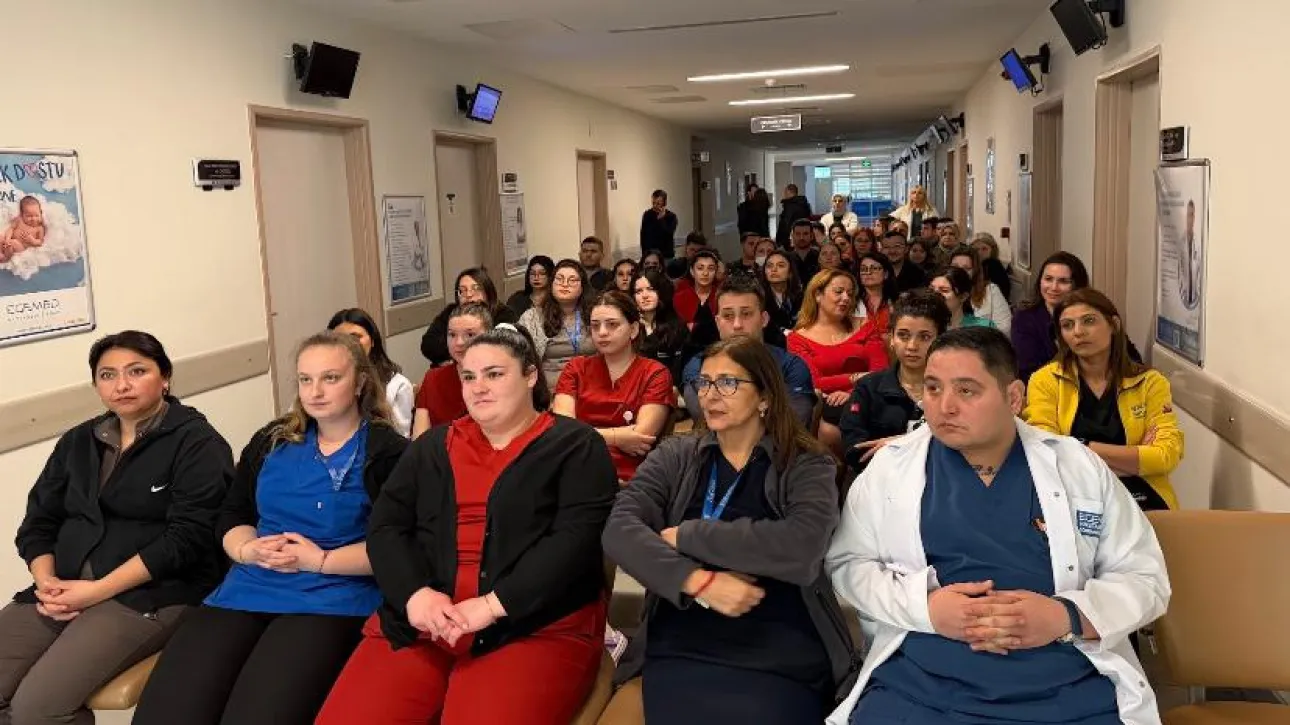
To increase patient and employee safety, we conducted trainings on awareness of adverse event reporting processes and correct practice.
We held our Adverse Event Reporting and Patient Safety Trainings, which we conduct regularly every year, on Tuesday, March 10, 2026, together with the intensive preparations carried out this year within the scope of the TÜSKA accreditation process, with content that reaches the field more strongly, is practice-oriented and increases interaction.
PURPOSE OF THE TRAINING
We approached this training not merely as information transfer but as a work in which risks are made visible, processes are questioned and the system is evaluated together.
The objectives were:
- Correct identification of adverse events and strengthening of the reporting culture at the institutional level.
- Increasing patient safety awareness.
- Effective and correct use of reporting processes.
- Improving risk awareness in clinical practice.
PARTICIPATION IN THE TRAINING AND STRUCTURE
The trainings were held with the participation of all our physicians, administrative staff and healthcare workers.
TOPICS COVERED IN THE TRAINING
- Nonconformity identification criteria (evaluation based on frequency level, area of impact and risk magnitude)
- The adverse event reporting system and its effective use
- Correct identification and classification of adverse events
- It was carried out within the scope of the approach of learning lessons from events and building a learning system
DOCUMENTATION AND RECORDING PROCESS
The training process;
- Attendance records
- Training content documents
- Presentation materials and photographs was recorded with,
and was documented in accordance with TÜSKA and SKS standards.
OUTCOMES OF THE TRAINING
With this training;
- Awareness of the adverse event reporting system has increased markedly.
- The reporting process has become clearer and more accessible in the field.
- The perspective of addressing risks from a system perspective rather than an individual one has been strengthened.
- Awareness of the importance of reports has developed and correct use of the system has been supported.
PROVIDING TRAINING IS NOT ENOUGH, ITS EFFECT MUST BE MONITORED
POST-TRAINING FOLLOW-UP AND EVALUATION
In the period after the training, follow-up activities were planned to evaluate how the training given is reflected in the field.
In this context;
- Monitoring of the use of the reporting system has begun.
- Awareness and changes in practice in clinical processes are being observed.
- The quality of the reports and their place in the process are being evaluated.
- Areas for improvement are being identified in line with feedback.
As Egemed Private Hospital; we approach patient safety with a system understanding that monitors, evaluates and continuously improves it in the field, and we maintain this approach with determination.