
 Türkçe
 Русский
 Español
 Deutsch
 Français


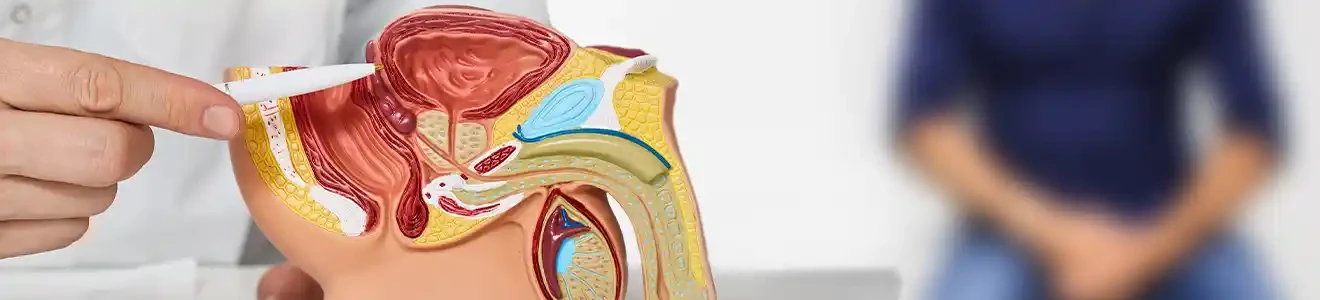
Male Genital Aesthetics
Egemed Andrology Clinic: Male Genital Aesthetics and Penile Surgical Treatments
Anatomical problems affecting male reproductive and sexual health may arise from congenital differences, trauma, the aging process, chronic diseases such as diabetes, or entirely personal aesthetic expectations. Today, Andrology (Men's Health) practice is no longer only a physical treatment; it has become one of the most important branches of medicine, directly affecting men's self-confidence, psychosocial health, and the quality of sexual life within the family.
As the Egemed Hospitals Urology and Andrology Clinic, we listen to our patients' expectations within the framework of scientific reality and offer the medical and surgical options best suited to their anatomy. Our penis enlargement, penis girth enhancement, non-surgical genital aesthetics, penile curvature (Peyronie's) correction, and Penile Prosthesis ("Happiness Rod") treatments are performed by our physicians who are experts in their field, to international medical standards, with patient privacy (confidentiality) maintained at the highest level.
Male Genital Aesthetics: Our Surgical Treatment Options
By evaluating the general anatomy, skin elasticity, and the patient's personal expectations, permanent surgical methods under general anesthesia or non-surgical aesthetic methods with local anesthesia in a clinic setting can be planned.
Penis Enlargement (Length Increase) Surgery
In male anatomy, a significant part of the penis remains hidden under the skin, attached to the pelvic bone by "suspensory ligaments." In enlargement (lengthening) surgery, no artificial material is added to the penis from outside. The medical procedure performed is the controlled surgical release of these suspensory ligaments and bringing the part of the penis that remains inside out. The procedure does not impair the function of the penis; depending on the patient's anatomical structure, the goal is to achieve a visible aesthetic lengthening.
Penis Girth Enhancement Surgery
The gold standard method used to increase the diameter (girth) of the penis is the use of fat tissue taken from the patient's own body (generally the lower abdomen or thigh region) by liposuction (Autologous Fat Transfer). The harvested fat cells are purified through special laboratory centrifuge procedures and injected homogeneously (evenly) into the subcutaneous tissue. Because it is entirely the body's own tissue, it carries no risk of allergic reaction or tissue rejection.
Combined (Enlargement and Girth Enhancement) Procedures
In patients who want an aesthetic and proportionate appearance, ligament release (lengthening) and fat injection (girth enhancement) can be successfully performed simultaneously in a single anesthesia session. In addition, in patients who have excess fat in the pubic region (pubis) and whose penis is buried, removal of fat tissue in this area (suprapubic liposuction) makes the existing length of the penis visually much more evident.
Non-Surgical Penis Enlargement and Girth Enhancement Options
For our patients who do not want to undergo a surgical operation, who are hesitant about receiving general anesthesia, or who do not want to set aside time for a hospital stay, there are comfortable, non-surgical medical aesthetic methods that can be performed in a clinic setting (using only local anesthetic creams):
Hyaluronic Acid Filler Applications
This is the injection of Hyaluronic Acid (HA)-based medical fillers, which are used safely in many fields of medicine and are fully compatible with human tissue, under the skin of the penis with the help of special cannulas. It is generally preferred to increase girth (diameter). The procedure time is quite short (approximately 30-40 minutes) and the patient can return to his daily routine the same day. The duration of the fillers varies on average between 12 and 18 months, depending on the person's metabolic rate and the density of the molecule used.
PRP (Platelet-Rich Plasma)-Assisted Procedures
This is the injection into the tissue of restorative plasma, obtained from the patient's own blood and rich in growth factors. Although PRP is not a "volume-increasing" agent on its own, because it supports tissue regeneration, improves skin quality, and accelerates blood supply in the area, it can be used in combination with filler or fat injection procedures to improve the medical quality of the treatment.
Penile Curvature and Peyronie's Disease
In male anatomy, the condition in which the penis bends to the right, left, upward, or downward at an angle different from normal during erection is called Penile Curvature. Although mild curvatures generally do not impair sexual function, curvatures of more than 30 degrees can physically make intercourse difficult, may cause pain in the partner or the patient, and can cause serious psychological performance anxiety.
What Causes Penile Curvature? Two Basic Medical Distinctions
In the medical approach and in surgical planning, the most important criterion is determining whether the curvature is congenital or developed later (presence of a plaque):
Congenital Penile Curvature
It occurs because of asymmetric development of the spongy tissues inside the penis (corpus cavernosum) during development in the womb, or because of a short urethra (the urinary canal). It is generally noticed with the first erections during adolescence. In this type of curvature, there is no pain and no hard mass (plaque) can be felt in the penis. There is only an anatomical asymmetry, and its only permanent treatment is surgical (plication) intervention.
Acquired Curvature (Peyronie's Disease)
It is a progressive disease that appears later, generally seen in men over 40 years of age. It occurs when micro-traumas in the outer sheath of the penis fail to heal and turn into hard, calcified tissue (plaque). These plaques prevent the penis from stretching and bend the penis toward the side where the plaque is located during erection. In the advancing stages, it is characterized by painful erection and a serious shortening of the penis length.
Diagnosis and Treatment Processes in Peyronie's Disease
Diagnosis of the disease begins with a physical examination by a specialist Urologist and Color Penile Doppler Ultrasonography performed in our clinic. Treatment is determined according to whether the disease is acute (painful stage) or chronic (stage in which the deformity has settled):
Non-Surgical (Medical) Treatment Approaches in the Acute Stage
The first 12-18 months of the disease is the "acute stage." Because the disease has not yet become stable at this stage, surgical intervention is not performed. To reduce pain and slow the formation of new plaque, methods such as vitamin E and oral medications, intralesional (directly into the plaque) needle injections, and ESWT (Shock Wave Therapy), which relieves pain by increasing blood supply, are preferred.
Surgical Correction Methods in the Chronic Stage
In the "chronic stage," when the pain has completely resolved and the curvature has not progressed for at least 6 months, surgery is the only way to correct the deformity:
- Plication (Shortening) Methods: Special permanent sutures are placed on the longer side of the penis so that this side is shortened and the penis is straightened. It is very successful in curvatures under 60 degrees in patients with sufficient length.
- Grafting (Lengthening) Methods: These are used in patients who experience very serious shortening and hourglass-shaped narrowing because of the plaque. The calcified plaque is cut, and a piece taken from the patient's own vein (autologous) or a medical patch is sewn into the resulting gap, lengthening and straightening the penis.
If, in addition to serious curvature (Peyronie's), the patient also has a persistent Erection Problem (Erectile Dysfunction) that does not respond to medication, correcting only the curvature will not restore sexual function. In this situation, or in patients who have completely lost the ability to have an erection because of causes such as chronic diabetes or prostate surgery, the permanent and definitive solution is implantation of a Penile Prosthesis ("Happiness Rod").
One-Piece (Malleable) Prostheses
These are silicone cylinders with a bendable structure. They are always in a rigid form, but thanks to the wire mechanism inside, they can be bent downward outside of sexual intercourse and concealed in underwear. They are very simple to use, carry no risk of mechanical failure, and are more affordable in terms of cost.
Three-Piece (Inflatable) Prostheses
This is the gold standard method, which imitates the natural erection mechanism exactly. It works with a hidden pump mechanism placed in the scrotum. Before intercourse, the patient inflates the cylinders by pressing the pump, and after intercourse deflates them, returning the penis to its completely natural (soft) state.
Important Information: Penile prostheses are placed entirely inside the body and are not noticeable from the outside in any way. Placement of the prosthesis definitely does not affect the patient's sexual pleasure, orgasm sensation, or ability to have children (ejaculation).
Whether it is genital aesthetics, curvature surgery, or prosthesis implantation, in all procedures that require anesthesia, the medical process is managed meticulously in our hospital:
- Medical Examination and Consent: Before the procedure, anatomical suitability is evaluated by our Urology physician. The possible results that can be achieved are shared transparently with the patient, and informed consent is obtained.
- Hospital Stay: Operations generally last between 1 and 2.5 hours depending on the technique used. For early infection control and the comfort of our patients, a hospital stay of generally 1 night is planned.
- Recovery and Restrictions: Patients can return to desk work or a light-paced daily life 3 to 5 days after discharge. However, to ensure full tissue integrity and the adaptation of the prosthesis to the body, avoiding heavy exertion and sexual activity for the period determined by the physician (on average 4-6 weeks) is a medical necessity.
Privacy, Confidentiality, and Appointment Information
Seeking medical consultation on andrology, male genital aesthetics, and prostheses can cause hesitation for many patients. As Egemed Hospitals, at all stages from your first visit until your treatment process is completed, we act within the framework of patient rights and strict confidentiality policies (privacy).
To learn the scientific treatment options before delays increase the surgical difficulty of diseases, to evaluate your anatomical suitability, and to make the surgical/medical plan best suited to you, you can confidently make an appointment at our clinic and obtain a specialist opinion.